
Cycling Bolivia’s Death Road is one of those travel experiences that sounds slightly unhinged when you explain it to someone back home. You start high in the Andes, get on a mountain bike and spend several hours descending towards the warmer Yungas region along a narrow road cut into the mountains.
I did the ride myself and came away thinking the reputation makes more sense once you’re actually there. The scenery alone makes the ride worth doing. You move through completely different landscapes and there are a few parts that can feel rather daunting. The idea isn’t to simply throw yourself down the road as fast as possible, though.
What Is Bolivia’s Death Road?

Yungas Road is better known as Death Road, and its history goes back to the 1930s. The road became infamous for its tight sections, steep drops and difficult conditions, particularly when it was still used as an important route between La Paz and the Yungas. A newer road opened in 2006 and took over most of that traffic.
That left the old road with a completely different purpose. These days, it’s best known as a mountain biking route and one of Bolivia’s more unusual adventure activities.
What Makes the Death Road Bike Tour So Famous?
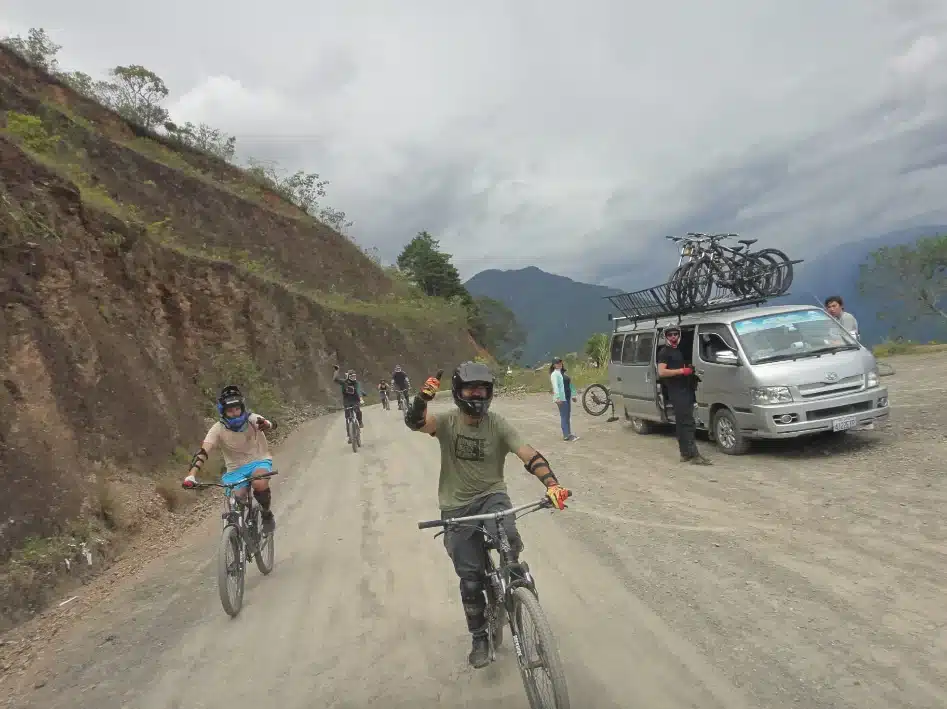
The obvious answer is the road itself. Parts are narrow, the surface can be rough and there are some very large drops to one side. It has earned the dramatic nickname for a reason.
But the reputation only tells you half the story. The other half is the landscape.
You begin the ride at about 4,650 metres before dropping towards 1,200 metres. The higher sections are all mountain scenery, then things gradually become greener and more tropical as you descend into the Yungas.
Get inspired:
- Explore Peru: from Machu Picchu to theAndes’ secrets
- Travel Guide for Colombia: Tips and Must-Visit Destinations
- Things to Do in Medellín, Colombia
- The Salkantay Trek in Peru: All You Need to Know
- Best Hikes in America: Amazing Trails in North, Central and South America
What Is It Like Cycling Death Road?

Eventually you reach the older gravel sections where the experience becomes much more interesting.
You’ll get a few stretches where you can pick up some speed, but plenty of others where slowing down makes more sense. With loose gravel, bumps and sharp corners along the way, there’s quite a lot to keep an eye on.
The road can be around 3.2 metres wide in some places, with very little room for mistakes. Your guide should warn you about the trickier sections, but I wouldn’t rely entirely on that. You still need to manage your own speed and stay focused. I used mine quite enthusiastically.
Weather Can Change Along the Route
At higher elevations, fog and rain can make visibility poor. Further down, things become warmer and more humid as you enter the rainforest environment.
I remember moisture building up on my clothes during the descent. It wasn’t some dramatic survival situation, but it did make the changing conditions very noticeable.
The Landscape Changes Completely
Higher up, the surroundings are open and mountainous. Keep descending and the vegetation becomes thicker, greener and increasingly tropical.
There are misty forest sections, waterfalls and huge views across the mountains. Some waterfalls can even spill directly onto the road, which is a strange thing to encounter when you’re already trying to keep your tyres pointing in the right direction.
There’s More Wildlife Than You Might Expect
You might see birds such as Andean condors or toucans and the wetter sections support plants including orchids and ferns. The wider region is also home to mammals such as spectacled bears and capuchin monkeys.
Actually spotting wildlife is another matter. You’re concentrating on steering, braking and not launching yourself into a bush, so this isn’t exactly a safari.
The Myths and Darker History of Death Road
There’s also a slightly eerie side to the route. Memorials can be seen along the road where people have died and local stories have helped create a darker reputation around the journey. Some people believe spirits watch over parts of the road.
The road’s history is genuinely tragic too. Before the newer route opened, accidents were common and the road developed its infamous reputation long before tourists started arriving with mountain bikes.
Is Death Road Actually Dangerous?

The biggest risks are fairly obvious. Loose surfaces can cause skidding, some corners are tight and the drops are not something you want to test.
The good news is that you’re not cycling it in the same circumstances that made the road notorious for everyday traffic. Modern tours are organised around cyclists and guides rather than having you compete with a stream of buses and trucks.
Still, common sense matters. Stay behind the guide when instructed, control your speed and don’t let the excitement convince you that faster automatically means better.
Do You Need Experience to Cycle Death Road?
You don’t have to be a serious mountain biker for this, although I’d want to be reasonably comfortable riding a bike first. Being able to control your speed and handle uneven ground is far more useful than trying to go quickly. The route changes throughout the ride, and sometimes slowing down is simply the sensible choice.
How to Choose a Death Road Bike Tour
There are plenty of companies offering a Death Road bike tour Bolivia, particularly around La Paz. I’d compare the bikes, protective equipment, group size and guide experience rather than simply choosing the cheapest option. The original experience I had was enjoyable, but some of the equipment was definitely showing its age.
That’s one area where saving a few pounds isn’t particularly clever. You want a bike with working brakes and suspension, plus protective gear that actually fits properly. I’d look at what people are saying about the equipment and safety arrangements rather than just whether they thought the scenery was pretty.
What Happens on the Day?
A typical trip starts with an early journey from La Paz towards the higher starting point at La Cumbre.
There’s usually a briefing before the ride, followed by a bike check and some time to get used to the equipment. The first downhill section is generally smoother before you reach the proper gravel road.
Once you’re on Death Road itself, expect several hours of riding with breaks along the way. Tours normally stop for water, snacks and photos, which gives your legs a chance to recover.
What Should You Bring?
You don’t need an enormous amount of gear because the tour company will normally provide the bike and protective equipment.
I’d bring water, sunscreen, comfortable cycling clothes and a light layer for the cooler sections. Gloves are useful too, particularly once the road gets rough.
And don’t forget that the weather can change considerably during the descent. Starting in cold mountain conditions and finishing somewhere much warmer means layers are your friend.
Is Cycling Death Road Bolivia Worth It?
For me, absolutely.
The road is obviously the main attraction, but what stuck with me was the combination of everything happening during the ride. You get dramatic mountain scenery, changing weather, rainforest, waterfalls and a fascinating history all within the same day.
Just don’t confuse memorable with reckless. The goal is to enjoy the ride and get to the bottom with the same number of functioning limbs you started with.
Final Thoughts
The road has a grim history and there are sections where the drops will definitely get your attention. But with a reputable operator, sensible riding and decent equipment, the experience is far more controlled than the name suggests.
For me, the biggest appeal was the variety. You start in the high Andes, descend through changing weather and eventually reach the much greener Yungas. Add in the wildlife, waterfalls and strange stories surrounding the road and you end up with much more than simply a scary bike ride.
It’s challenging, occasionally nerve-racking and completely different from seeing Bolivia from a tour bus. And yes, I’d do it again.